Skip to content



A deck that looks beautiful in May must withstand months of changing weather before spring returns. In Connecticut, outdoor structures face freezing temperatures, snow, summer humidity, and repeated freeze-thaw cycles. These conditions make material selection especially important for homeowners planning a new deck or replacing an aging one.
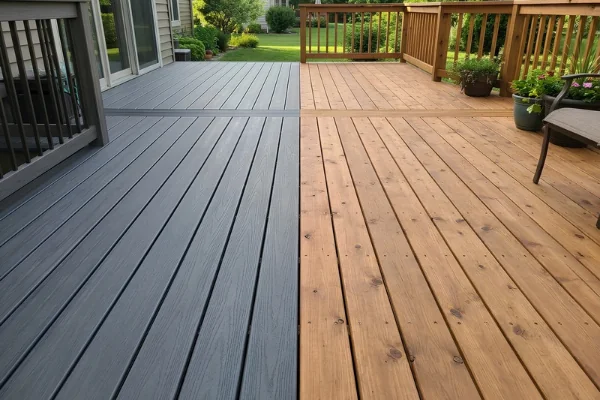
When comparing composite decking vs. wood decking, both materials can perform well in Fairfield County. The important consideration is that they need different maintenance and care. The best choice depends on your budget, preferred aesthetic, maintenance expectations, and how you plan to use your outdoor space.
For homeowners in Greenwich, Westport, Darien, New Canaan, and Fairfield, the decision involves more than choosing attractive boards. The right decking material must work with the home’s architecture, the property’s conditions, and the project’s structural requirements.
This guide compares composite, pressure-treated wood, and premium hardwood decking to help you understand the differences, evaluate the long-term costs, and choose a material suited to Connecticut’s climate. Let’s dive in and take a look at the details and a cost comparison of composite decking vs. traditional wood
THE REAL COST COMPARISON: UPFRONT PRICE VS. LIFETIME VALUE
The initial price is one of the biggest differences between composite and wood decking. Pressure-treated lumber generally costs less upfront, while composite and premium hardwoods require a larger initial investment. However, installation costs tell only part of the story.
Upfront Material and Installation Costs
A deck’s total cost depends on its size, design, framing, accessibility, railing system, stairs, and site conditions. The material you select also affects labor and installation requirements. As a general starting point, here are some price points to consider:
| Decking material | Illustrative installed cost per square foot | Estimated cost for a 400-square-foot deck |
| Pressure-treated wood | 15–25 | 6,000–10,000 |
| Composite decking | 30–50 | 12,000–20,000 |
| Ipe or Garapa hardwood | 35–55 | 14,000–22,000 |
These figures are planning estimates, not guaranteed prices. They may not include every project expense, such as major demolition, extensive site preparation, permitting, upgraded railings, lighting, or landscaping repairs.
A 20×20 deck provides 400 square feet of surface area, while a 12×12 deck provides 144 square feet. Smaller decks can still have relatively high per-square-foot costs because permitting, labor setup, and mobilization expenses do not decrease proportionally with size.
When comparing estimates, ask contractors to specify what each price includes. A lower quote may reflect a simpler design or different railing, framing, and finishing choices rather than a meaningful difference in material value.
The Long-Term Cost Equation
Composite decking costs more upfront than wood, but it can save you money on maintenance over time.
Pressure-treated wood needs regular cleaning and periodic staining or sealing to protect it from Connecticut’s weather. Composite decking mainly needs routine cleaning, without the extra cost of staining or sealing.
When comparing costs, consider:
- Installation: Materials, labor, framing, railings, and stairs.
- Maintenance: Cleaning supplies, stain, sealant, or professional services.
- Repairs: Replacing damaged boards or fixing weather-related wear.
- Replacement: How soon the decking may need to be replaced.
If you plan to stay in your home for many years, composite may be worth the higher upfront cost because it requires less upkeep. Wood is still a good option if you want to spend less initially, prefer the look of natural wood, and don’t mind the extra maintenance.
HOW CONNECTICUT WEATHER AFFECTS EACH MATERIAL
Connecticut’s seasonal conditions place different demands on decking materials. Freezing temperatures, precipitation, humidity, and summer sunlight can all affect the appearance and performance of an outdoor deck.
The key is understanding how each material responds to moisture, temperature changes, and regular exposure.

Freeze-Thaw Cycles and Moisture Penetration
Connecticut winters can be tough on decks. Wood absorbs moisture and expands, then shrinks as it dries. Over time, these changes can cause boards to crack, warp, or deteriorate.
Pressure-treated wood resists rot and insects, but it still needs proper drainage and regular maintenance to stay in good condition.
Composite decking, especially capped composite, has a protective outer layer that helps keep moisture out. This makes it less vulnerable to some weather-related damage, although proper installation and care are still important.
Hardwoods such as Ipe are naturally dense and resist rot. They can hold up well in Connecticut’s climate when installed correctly, but they still need good drainage and solid structural support.
No matter which material you choose, proper installation is essential. Water needs to drain away from the deck, boards must be spaced correctly, and the framing needs to be protected from moisture.
Summer Heat and UV Exposure
Connecticut summers bring plenty of sunshine and humidity, which can affect how your deck looks and feels.
Composite decking can get hot in direct sunlight, particularly in darker colors. Lighter boards may be a better choice for sunny decks or areas where you often walk barefoot.
Wood also changes with sun exposure. Without proper care, pressure-treated boards can fade, dry out, crack, or splinter. Ipe and Garapa have rich natural colors, but sunlight gradually changes their appearance, too.
Ipe, for example, naturally turns silver-gray over time if you don’t apply oil to maintain its original brown color. Some homeowners like this weathered look, while others prefer to preserve the wood’s natural tones.
Before choosing a material or color, consider how much sun your deck receives and how you plan to use it. A sunny entertaining area may need different materials and finishes than a shaded deck surrounded by trees.
Snow Load and Structural Considerations
Snow and ice are important considerations for Fairfield County homeowners, but the strength of your deck depends on more than the decking boards.
The underlying structure—including the posts, beams, joists, footings, and connections—must meet local building-code requirements and support the expected loads.
Both wood and composite decking can perform well in snowy conditions when installed correctly. However, composite boards may require specific spacing and support, so it’s important to follow the manufacturer’s installation guidelines.
Before building a deck, check local permit requirements and work with a contractor who understands Connecticut’s building codes. Larger or elevated decks may also require additional engineering.
Winter care matters, too. Use snow-removal tools and ice-melt products approved for your decking material, and avoid anything that could scratch the surface or damage its protective coating.
MAINTENANCE REQUIREMENTS: WHAT EACH MATERIAL ACTUALLY DEMANDS
Maintenance is one of the clearest differences in the composite decking vs. wood decking maintenance comparison. Both materials benefit from regular inspection, but wood generally requires more ongoing attention to preserve its appearance.
Wood Deck Maintenance Schedule
Clean and inspect pressure-treated wood regularly, with a more thorough inspection at least once a year. Look for loose fasteners, damaged boards, surface deterioration, and areas where water collects.
Staining or sealing is commonly needed every two to three years, although exposure and product instructions can change the schedule. Decks exposed to intense sunlight or frequent moisture may require attention sooner.
A typical wood deck maintenance routine includes:
- Cleaning the deck and removing leaves, dirt, and other debris.
- Checking boards for splintering, cracking, warping, and decay.
- Inspecting fasteners, railings, stairs, and visible structural components.
- Applying an appropriate stain or sealant when needed.
- Replacing damaged boards before deterioration spreads.
Premium hardwoods such as Ipe and Garapa also benefit from regular cleaning and inspection. Applying an appropriate exterior oil can help preserve their original color, but it is not always necessary for structural longevity. Without oil, the wood typically weathers toward gray.

Composite Deck Maintenance Schedule
Composite decking generally requires less maintenance than wood. Regular cleaning with a manufacturer-approved cleaner and suitable brush helps remove dirt, pollen, food residue, and organic debris.
In Connecticut, cleaning in spring and fall is a practical starting point, although shaded or heavily used decks may need more frequent attention. Mold and mildew can develop where moisture and organic material accumulate, particularly in areas with limited airflow.
Composite maintenance typically includes:
- Sweeping away leaves and debris before they accumulate.
- Washing the surface according to manufacturer instructions.
- Removing spills and organic residue promptly.
- Inspecting railings, fasteners, stairs, and the supporting structure.
- Using approved products for winter snow and ice management.
Capped composite decking generally does not need staining or sealing. However, damaged boards may be more difficult to repair invisibly than wood, and some surface damage requires board replacement.
For homeowners who want to spend more time enjoying their outdoor space and less time refinishing it, composite offers a practical advantage.

AESTHETICS AND DESIGN SUITABILITY FOR FAIRFIELD COUNTY HOMES
The right deck should complement your home’s style and feel like a natural extension of your outdoor space. Fairfield County homes range from traditional Colonials and coastal properties to modern homes and large estates. Both wood and composite decking can look great when you choose the right colors, railings, and design.
The Natural Appeal of Wood
Wood offers natural grain, texture, and color variations that give every deck a unique look. It’s a popular choice for traditional homes, historic properties, and outdoor spaces that feature natural materials.
Pressure-treated wood can be stained to match your home’s exterior, while Ipe offers rich, dark tones for a more upscale finish. Wood is also a good option for custom designs that require detailed carpentry or specialized cuts.
For homeowners in Darien or New Canaan who prefer a classic, natural look, hardwood decking may be worth the higher upfront cost.
The Versatility of Modern Composite
Modern composite decking comes in a wide range of colors and finishes designed to resemble natural wood. Textured surfaces and blended colors create a realistic look without regular staining or sealing.
Composite works especially well with contemporary and transitional homes. Many manufacturers also offer matching railings, trim, and fascia, making it easier to create a coordinated design.
Another advantage is consistency. Composite boards generally have a more uniform color and appearance than natural wood, which can help with large decks, multi-level designs, and spaces with built-in seating or lighting.
Before making your decision, ask for samples and view them outdoors in natural light. This helps you see how each color and finish looks alongside your home’s siding, stonework, landscaping, or pool.
LIFESPAN AND DURABILITY: WHAT TO EXPECT OVER TIME
The composite decking vs. wood decking lifespan durability comparison depends on material quality, installation, maintenance, and exposure. No decking material has a guaranteed service life under every set of conditions.
| Material | General lifespan considerations | Main durability advantage |
| Pressure-treated wood | Often around 15–20 years for the decking surface with appropriate care; conditions vary | Lower initial cost and repair flexibility |
| Capped composite | Can last 25–30 years or longer, depending on the product and conditions | Reduced routine refinishing and good moisture resistance |
| Ipe hardwood | Can last several decades with suitable installation and care | Natural density and resistance to decay |
| Garapa hardwood | Can provide long service with appropriate installation and maintenance | Natural hardwood appearance and durability |
These are broad planning ranges, not guarantees. Product warranties differ in coverage, exclusions, and duration. Don’t treat a warranty as a promise that every component of the deck will last the same length of time.
It is also important to distinguish the decking boards from the substructure. A composite surface can remain in good condition while the framing beneath it develops moisture damage. Conversely, a sound wood frame may outlast the original surface boards.
A long-lasting deck requires compatible materials, proper drainage, appropriate fasteners, adequate ventilation, and regular inspection. Choosing a premium surface without investing in sound construction can undermine the value of the entire project.

MAKING THE RIGHT CHOICE FOR YOUR PROPERTY
No universal winner exists in the composite vs. wood deck pros and cons comparison. The right choice depends on your budget, preferred appearance, maintenance expectations, and plans for the property.
| Priority | Material to consider | Why |
| Lower initial investment | Pressure-treated wood | Generally costs less upfront |
| Less recurring maintenance | Capped composite | Typically eliminates routine staining and sealing |
| Natural grain and texture | Wood or hardwood | Provides an authentic natural appearance |
| Premium natural finish | Ipe or Garapa | Offers distinctive hardwood character |
| Consistent color and styling | Composite | Provides coordinated colors and matching accessories |
| Long-term ownership | Composite or premium hardwood | Can offer long service life when properly installed |
Composite decking is a great choice if you want a durable, low-maintenance deck. It costs more upfront, but you can save time and money by avoiding regular staining and sealing.
Pressure-treated wood is a good option if you want to keep initial costs down and don’t mind regular maintenance. It also works well for homeowners who prefer natural wood or need a custom deck design.
Ipe and Garapa hardwoods are worth considering if you want a premium natural finish. They cost more upfront but offer a distinctive look and can last for decades with proper care.
Get Expert Decking Services Today
At Fairfield County Deck Builders, we help homeowners choose materials that fit their homes, budgets, and needs. We also consider the details that affect your deck’s performance, including framing, railings, stairs, drainage, and lighting.
Planning a deck in Greenwich, Westport, Darien, New Canaan, Fairfield, or a nearby community? Schedule a design consultation with our team. We’ll help you compare options, understand the costs, and choose a deck that fits your home and outdoor space.
Contact Fairfield County Deck Builders today to start planning your deck project.

FREQUENTLY ASKED QUESTIONS
What is the downside of composite decking?
Composite decking costs more upfront than pressure-treated wood and can get hot in direct sunlight. It also can’t always be repaired like wood, so badly damaged boards may need to be replaced.
What ruins composite decking?
Standing water, built-up leaves and dirt, poor installation, and harsh cleaning products can damage composite decking. Keep the surface clean, ensure proper drainage, and follow the manufacturer’s guidelines for cleaning and winter care.
How much would a 20×20 composite deck cost?
A 20×20 composite deck may cost around 12,000–20,000 installed in Fairfield County. The final price depends on materials, labor, railings, stairs, and site conditions. Ask for an itemized estimate to understand the full cost.
How much does a 12×12 composite deck cost?
A 12×12 composite deck may cost around 4,300–7,200 installed. The price depends on the decking material, design, and features such as stairs and railings. Smaller decks can still have significant labor and setup costs.
Is composite decking worth the extra cost compared to wood for Connecticut homeowners?
Composite decking may be worth the extra cost if you want less maintenance and plan to keep your deck for many years. Compare the upfront price with the ongoing costs of cleaning, staining, repairs, and eventual replacement before deciding.